
Authenticity in Worcestershire sauce is not about hype or fancy packaging. It shows up as a calm, consistent identity: a savoury depth that feels developed, a tang that feels clean rather than harsh, and an aroma that smells unified rather than scattered.
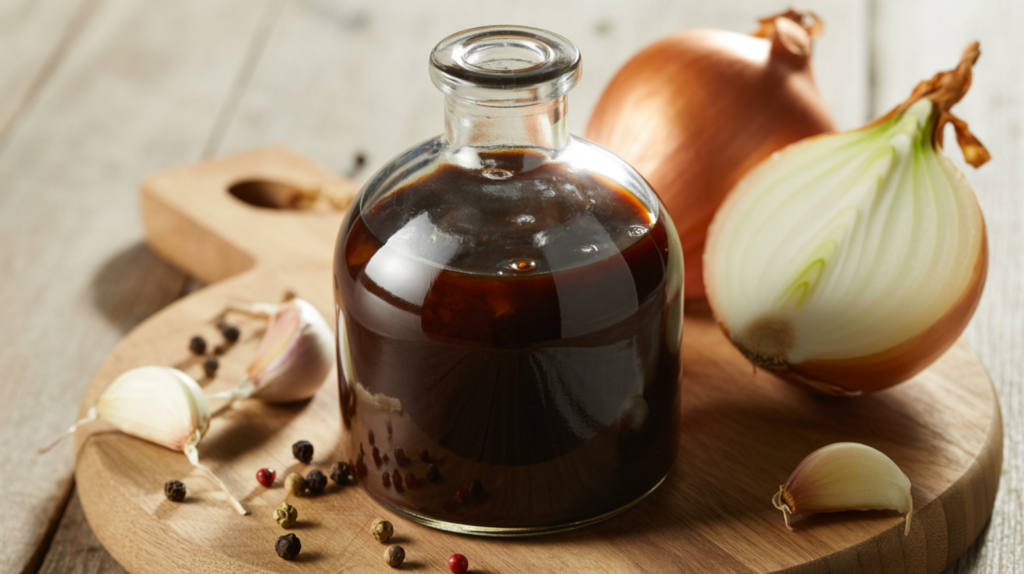
When a sauce is authentic, it doesn’t need to shout, it simply tastes like it belongs in the category people recognise as true Worcestershire sauce.
The best way to assess authenticity is to look for a cluster of signals that agree with each other, rather than relying on a single claim on the label.
1. Flavour Behaviour: Does It Feel Developed or “Mixed”?
An authentic Worcestershire sauce tends to behave like a finished product, not a quick mixture. The taste usually arrives in stages: first a tangy edge, then a savoury centre, then a lingering aromatic finish.
When a sauce tastes like separate parts, sharp vinegar on top, sweet base underneath, spice poking out randomly, it often feels less authentic because it lacks integration. Authenticity is not intensity; authenticity is coherence.
That coherence is strongly linked to how the sauce has been allowed to mature, including the way a longer maturation window shapes the final balance.
2. Aroma Unity: The Smell Test Most People Forget
Smell is one of the fastest authenticity checks because it reveals integration. An authentic Worcestershire sauce often smells “whole,” like one savoury perfume. A weaker sauce can smell busy, where vinegar dominates or spices feel disjointed.
Aroma unity tends to come from controlled fermentation and well-chosen ingredients, which is why a quick sniff can tell you whether the sauce feels complete before you even taste it.
3. Ingredient Clarity: Does the Recipe Look Like a Real Tradition?
Authenticity often starts with a recipe structure that resembles the category’s traditional foundation. That doesn’t mean every authentic sauce is identical, but it usually shares a sensible backbone: acidity, sweetness, savoury elements, and aromatics working together.
If the ingredient list is vague, overloaded with stabilisers, or built mainly around sweetness and sharp acidity, the sauce may still be usable, but it often feels further away from the authentic profile people expect.
The real question is whether the ingredients support the classic identity, including the flavour layers people associate with Worcestershire sauce.
4. The Finish: What Lingers After You Taste It
Authentic Worcestershire sauce tends to leave a gentle savoury echo rather than a sharp bite or sticky sweetness. The finish matters because it is harder to fake than the first sip.
A sauce can be engineered to taste strong upfront, but a mature finish usually reflects genuine depth. If the aftertaste feels harsh, overly acidic, or one-note, the sauce may be less authentic in its overall behaviour.
5. Consistency Over Time: A Hidden Marker of Authentic Production
Authenticity often includes reliability. When a sauce tastes consistent from bottle to bottle, it suggests stable production methods and ingredient control. Unpredictable flavour shifts can indicate shortcuts or inconsistent sourcing.
This matters because Worcestershire sauce is often used as a quiet enhancer. If the sauce is inconsistent, cooking becomes inconsistent. If it is steady, it becomes a dependable tool.
Conclusion – Authenticity Is a Pattern, Not a Claim
Authenticity in Worcestershire sauce is best assessed as a pattern: developed flavour behaviour, unified aroma, recipe clarity, a mature finish, and steady consistency over time. When these signals align, the sauce tends to feel genuinely rooted in the Worcestershire tradition, even if the brand has its own style.
In the simplest sense, an authentic Worcestershire sauce feels finished, not just strong, and that calm sense of completeness is what separates tradition from imitation.