
The main difference between teriyaki sauce and soy-based marinades lies in their composition and flavour profile. Teriyaki sauce is a sweet and savoury glaze made with soy sauce, sugar, and mirin or sake, while soy-based marinades focus more on saltiness and umami without the added sweetness. Both are popular in Asian-inspired cooking, but they serve different culinary purposes and should not be used interchangeably without understanding their roles.
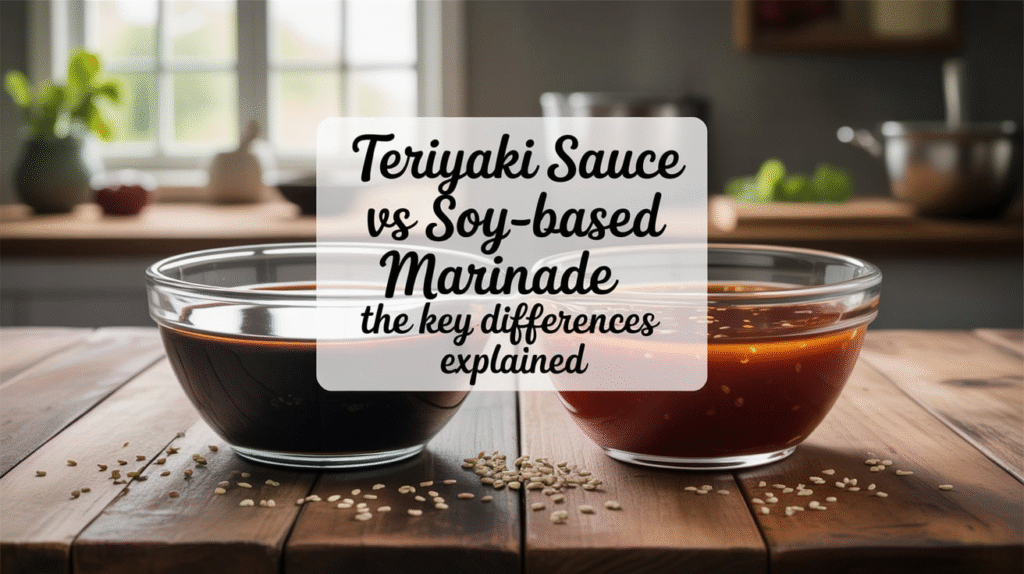
In this article, we’ll explore how each sauce is made, when to use one over the other, and how they affect your dishes.
What Is Teriyaki Sauce?
Teriyaki sauce is a glossy, thick sauce with a balance of salty, sweet, and umami notes. It’s commonly used in Japanese cooking, often as a glaze or finishing sauce.
Ingredients That Make Teriyaki Unique
The ingredients of teriyaki sauce give it its distinct flavour and texture.
- Soy sauce – forms the savoury base.
- Sugar or honey – provides the characteristic sweetness.
- Mirin or sake – adds a touch of acidity and depth.
- Optional garlic and ginger – for enhanced flavour in Western adaptations.
When simmered, the sugars caramelise, creating a shiny coating ideal for grilling or stir-frying.
What Is a Soy-Based Marinade?
Soy-based marinades are typically mixtures centred around soy sauce but with fewer sweet components. These marinades are more fluid and designed to tenderise meats or infuse flavour during resting periods before cooking.
Common Components of Soy Marinades
These marinades often feature a more savoury and acidic profile than teriyaki.
- Soy sauce – provides umami and saltiness.
- Acid (e.g., vinegar or citrus juice) – breaks down proteins for tenderisation.
- Aromatics (like garlic, ginger, chilli) – add depth and fragrance.
- Oils (sesame or vegetable) – help coat the meat or vegetables evenly.
While teriyaki is used to finish a dish, soy marinades are primarily used before cooking to enhance texture and taste.
Texture and Consistency: How They Differ
Teriyaki sauce is thick and glossy, often reduced or cooked, while soy-based marinades are thin and liquid.
Why This Difference Matters
The texture influences how the sauce is applied and how it behaves during cooking.
- Teriyaki sauce clings to food, making it ideal for glazing and basting.
- Soy-based marinades soak into proteins, making them perfect for pre-cooking flavour development.
Using a soy marinade as a glaze won’t provide the same sticky finish, while using teriyaki sauce for marinating may not penetrate the meat as effectively.
Flavour Profile Comparison
Both sauces start with soy sauce, but their flavour profiles diverge from there.
Teriyaki Sauce: Sweet and Savoury
- Sweetness: From sugar, honey, or mirin.
- Mild umami: Balanced by sweet and tangy notes.
- Caramelised finish: Especially when cooked or grilled.
Soy Marinade: Savoury and Sharp
- Bold umami and saltiness: No sugar masking the savoury flavour.
- Tanginess: From added vinegar or citrus.
- Aromatic: With stronger notes of garlic, ginger, and sometimes heat from chilli.
Teriyaki is more child-friendly and mild, while soy marinades bring a punchier, more robust profile.
Cooking Applications: When to Use Each
Understanding which sauce to use and when can improve your dish dramatically.
Ideal Uses for Teriyaki Sauce
Teriyaki sauce works best as a glaze or finishing touch:
- Grilled meats and vegetables – adds a shiny, sweet glaze.
- Stir-fry and rice bowls – for a rich, coating sauce.
- Baked salmon or chicken – creates a flavourful crust.
Best Situations for Soy-Based Marinades
Soy marinades excel when used before cooking:
- Marinating steaks, chicken, or tofu – enhances flavour and tenderises.
- Asian-style barbecue – imparts deep, savoury flavour before grilling.
- Slow-cooked or pressure-cooked recipes – where sweetness may not be desired.
Nutritional Considerations
Teriyaki tends to be higher in sugar, while soy marinades are lighter and more savoury.
Making Your Own: Control the Flavour
Both sauces can be easily made at home using soy sauce as a base, see our recipe section for detailed guides.
Final Thoughts
While both teriyaki sauce and soy-based marinades start with soy sauce, their uses, taste, and texture are very different. Teriyaki is ideal when you want a sweet glaze or coating, while soy-based marinades are perfect for infusing flavour before cooking.
Knowing when and how to use each one ensures your meals are seasoned to perfection and never overly sweet or salty in the wrong context.
FAQs
Here are some questions and answers about Teriyaki Sauce vs Soy-Based Marinade.
Can I use teriyaki sauce instead of soy marinade?
You can, but it depends on the dish. Teriyaki sauce works best as a glaze or finishing sauce. It doesn’t penetrate meat like a marinade would, and its sugar content may burn if used incorrectly.
Is soy sauce the same as teriyaki?
No. Soy sauce is a salty, fermented sauce used as a base in many Asian dishes. Teriyaki sauce includes soy sauce but also contains sugar, mirin, and other flavourings, making it sweet and thicker.
Which is healthier: teriyaki or soy marinade?
Soy marinades are generally lower in sugar and calories, making them a better option if you’re watching your diet. However, sodium levels can be similar in both.