
Worcestershire sauce earns its reputation through patience. While many condiments rely on immediate punch, Worcestershire sauce becomes itself through ageing, where time quietly refines sharp ingredients into a smooth, savoury whole.
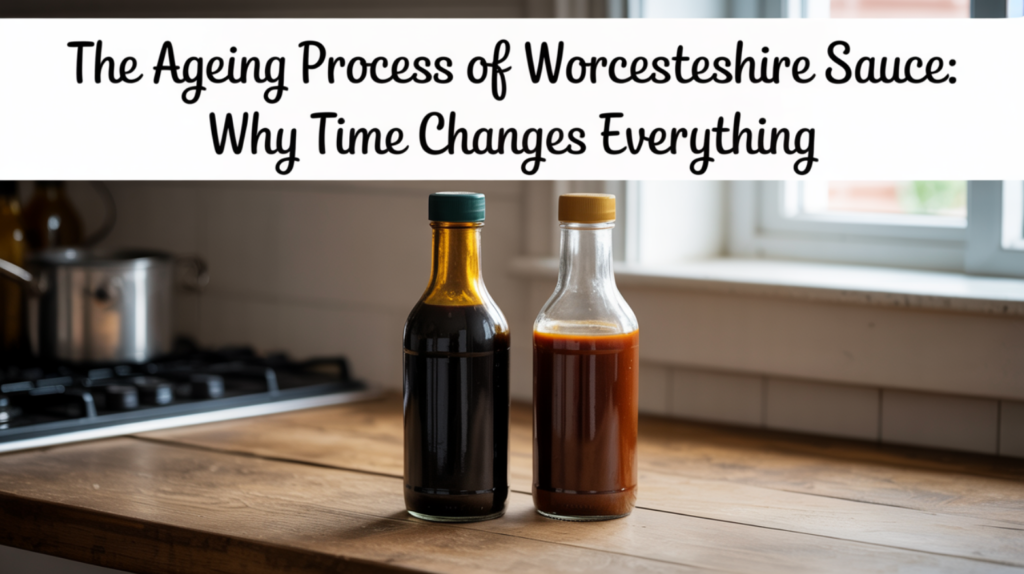
This slow maturation is a major reason the sauce stays distinctive even in a kitchen full of bold flavours.
Ageing is not simply waiting; it is controlled development, where flavour becomes calmer, deeper, and more coherent.
What “Ageing” Means in Worcestershire Sauce
Ageing in Worcestershire sauce refers to the period when the mixture is allowed to rest so its ingredients can integrate and transform. During this stage, the sauce moves away from tasting like separate components and begins tasting like a single, deliberate product.
Instead of vinegar standing out sharply or savoury notes feeling too intense, the profile becomes more rounded. The sauce starts to feel settled, as if its flavour has found a natural balance.
This shift happens because chemical and biological processes continue working long after the initial mix, quietly shaping the sauce’s identity.
How Time Softens Harsh Notes
Many ingredients that contribute power early on can feel aggressive at first. Vinegar can seem sharp, anchovy can feel strong, and spices can poke out awkwardly when they haven’t blended.
As ageing progresses, harsh edges soften. Tang becomes cleaner rather than biting, savouriness becomes deeper rather than louder, and spice becomes aromatic rather than prickly. The overall result is a sauce that feels more mature and easier to use across different foods.
If fermentation begins the transformation, ageing completes it, extending the changes that develop depth and making them more stable and consistent.
Why Ageing Builds a More “Complete” Savoury Depth
Ageing also changes how umami feels. Early savouriness can taste intense but slightly rough, while aged savouriness tends to taste smoother and more satisfying, as though it fills the mouth evenly.
This happens because breakdown and integration continue over time, allowing savoury compounds to settle into a balanced structure rather than sitting on top of the flavour.
That deep, calm savouriness explains why a few drops of Worcestershire sauce can make dishes taste more complete without making them taste like the sauce itself.
Aroma Development: The Part You Notice Before You Taste
Ageing affects aroma just as much as taste. A younger sauce may smell busy, with individual spice notes standing out. A well-aged sauce tends to smell unified, with a richer, more rounded scent that feels “whole” rather than scattered.
That aroma unity is often what people describe when they say a Worcestershire sauce smells “proper”, it feels finished.
What Ageing Means for Consistency and Everyday Use
Aged Worcestershire sauce tends to behave more predictably in cooking because its flavour components are integrated. Instead of swinging too sharp or too sweet in different recipes, it contributes depth in a more controlled way.
This also connects to the ingredients used in the first place, because the sauce can only age well if it begins with a sensible base, including the materials that shape the product’s long-term character.
Conclusion – Time Makes Worcestershire Sauce Taste “Finished”
Ageing gives Worcestershire sauce its sense of completion. It softens harshness, builds calm savouriness, and merges separate flavours into one coherent identity. When a sauce is properly aged, it doesn’t just taste strong; it tastes settled, refined, and dependable.
That is why Worcestershire sauce is not simply a recipe in a bottle, it is a product shaped by time, where patience becomes flavour.