
BBQ sauce feels simple when it hits the tongue, yet it works because a few invisible forces stay in balance. One of the biggest is acidity: the sauce’s pH influences how it tastes, how stable it remains after opening, and how confidently a brand can keep the flavour consistent from bottle to bottle.
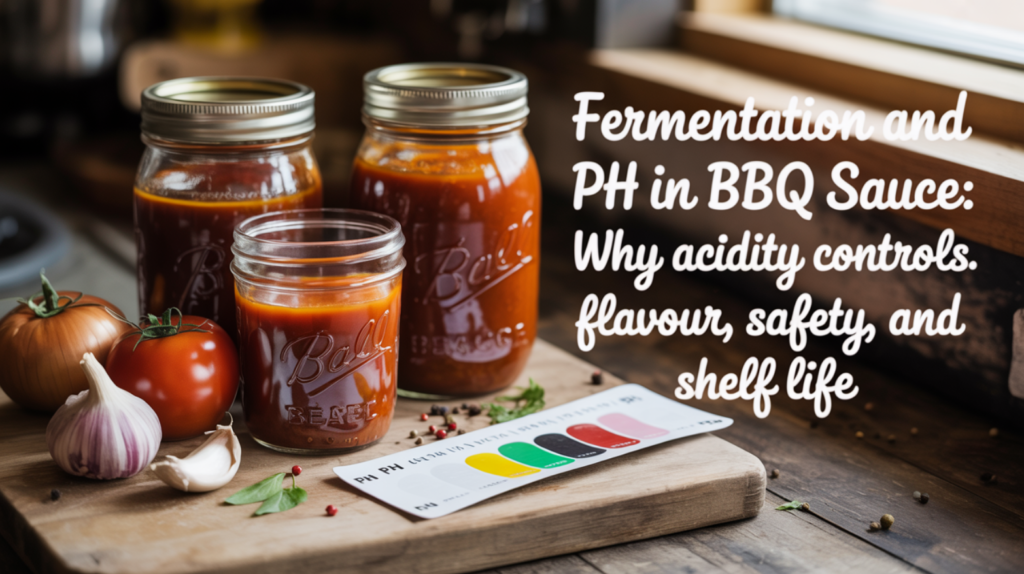
When you understand fermentation and pH, you start to see why certain BBQ sauces taste brighter, last longer, and feel “cleaner” on the finish.
1. pH is the “control dial” behind tang, sweetness, and stability
pH is a measure of how acidic something is, and acidity is what stops BBQ sauce from tasting like sugary tomato paste. A slightly lower pH sharpens the sauce’s tang, lifts smoky notes, and keeps sweetness from becoming sticky. That is why sauces with a well-managed acid balance often feel more lively and less heavy, even when they contain similar sweeteners.
This balance also affects texture. As acidity rises, certain thickening behaviours change, which is one reason some sauces feel silky while others feel oddly thin or pasty.
If you’ve ever compared a few bottles side-by-side, you’ve already noticed the difference, it often starts with the ingredients that shape the acid profile before the first spice even enters the mix.
2. Fermentation in BBQ sauce is less about “sour” and more about depth
When people hear “fermentation,” they imagine sharp sourness. In BBQ sauce, fermentation is usually about complexity: it can create gentle savoury notes, subtle fruitiness, and a rounded tang that feels less aggressive than plain vinegar.
Brands don’t always ferment the finished sauce. More often, they use fermented components (such as aged vinegars, fermented chilli ingredients, or fermented fruit elements) to add depth without making the sauce taste like a science experiment. The result is a tang that feels integrated rather than loud, almost like the flavour has had time to settle into itself.
That depth matters because BBQ sauce is meant to cling to food and stay enjoyable for more than one bite; fermentation-derived notes tend to linger in a pleasing way rather than fading quickly.
3. Why acidity is also a shelf-life strategy
Acidity is not only flavour, it is also stability. A well-acidified sauce is naturally less welcoming to spoilage microbes, which helps explain why some bottles stay consistent for longer after opening.
This is where the real-world behaviour matters most: once the seal is broken, the sauce faces oxygen exposure, repeated temperature swings, and small contamination risks from spoons or brushes. In that moment, the sauce depends on the conditions that preserve both taste and freshness, and pH is one of the quiet protective layers working in the background.
That doesn’t mean “more acidic is always better.” Push acidity too far and the sauce can taste sharp, thin, or harsh. The best products feel balanced: safe and stable, yet still smooth and satisfying.
4. What pH can tell you about brand quality without lab equipment
You don’t need a lab to sense when a sauce is poorly balanced. A few signals show up immediately:
- A harsh, nasal tang can suggest acidity that hasn’t been integrated into the flavour structure.
- A flat sweetness can mean acidity is too low to lift the sauce.
- A strange aftertaste sometimes appears when acid and sweeteners fight rather than cooperate.
- Inconsistent bottles (one tastes great, the next tastes “off”) can point to weak process control.
Strong brands usually feel more consistent because they treat acidity as a core design choice, not an afterthought. They build the sauce around acid balance, then layer sweetness, smoke, spice, and aromatics on top so the final profile feels coherent.
5. Fermentation, acidity, and “clean label” confidence
Many shoppers look for sauces that feel straightforward: recognisable ingredients, stable texture, and predictable flavour. Fermented elements can support that goal because they add depth without requiring a long list of flavour tricks.
At the same time, a brand that controls pH well can often rely less on heavy stabilisation. That tends to create a sauce that feels calmer on the palate, not overly sticky, not oddly sharp, and not confusingly artificial. The experience becomes simple in the best way: you taste what the label promises.
Conclusion – What fermentation and pH really mean for BBQ sauce
BBQ sauce works when its flavour and stability are built on a solid foundation of acid balance. Fermentation contributes depth and roundness, while pH quietly influences tang, texture, and how reliably the product holds up after opening. When brands manage these elements well, the sauce tastes more coherent, feels more satisfying, and stays dependable in everyday use, which is exactly what a pantry staple should do.