
A regional BBQ sauce style is a recognisable flavour pattern that developed in a particular place, shaped by local ingredients, cooking traditions, and the kinds of meat people barbecue most often. In other words, BBQ sauce isn’t one fixed thing; it’s a family of sauces built on the same idea of balance, with the core BBQ sauce elements changing their emphasis from region to region.
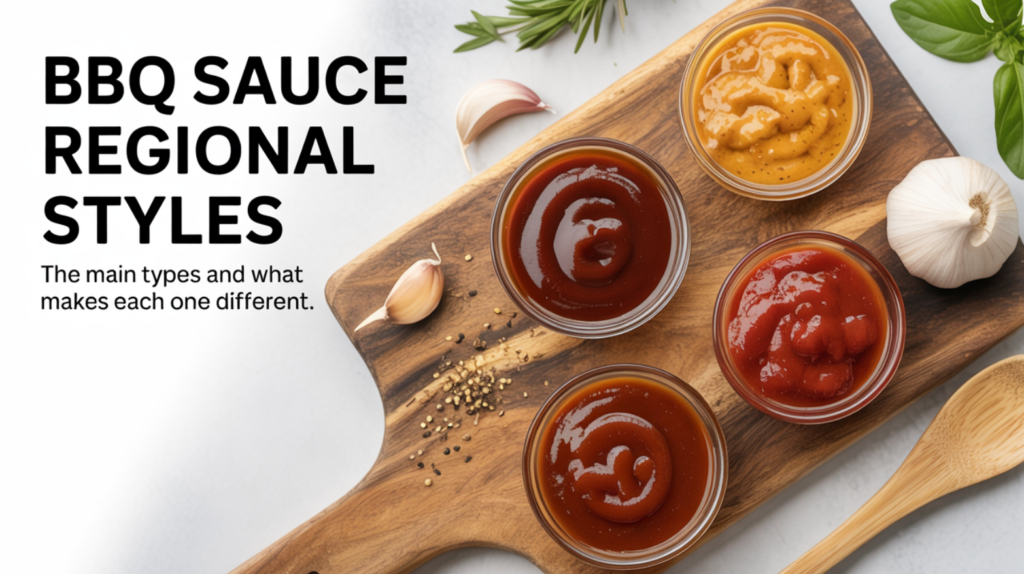
Once you know the patterns, labels start to make more sense, and you can predict whether a bottle will taste sweet, sharp, smoky, peppery, or creamy before you even open it.
A Quick Way to Understand Regional Styles
Most regional sauces differ along four simple levers:
- Sweetness (molasses, brown sugar, honey, fruit)
- Acidity (vinegar, citrus, fermented tang)
- Heat (black pepper, chilli, cayenne, hot pepper mash)
- Texture (thin mop sauce vs thick glaze vs creamy white sauce)
Those levers are controlled by the ingredient choices that shape the sauce’s character, which is why two “BBQ sauces” can taste like completely different condiments.
1) Kansas City Style: Thick, Sweet, and Glossy
Kansas City-style sauce is the one many people picture first: rich, sweet, thick, and dark, often with a noticeable smoky note. The texture is designed to cling to ribs and chicken, and the sweetness creates that familiar sticky glaze when it hits heat.
What it feels like: comforting, rounded, bold
What drives it: tomato base + molasses/brown sugar + smoke/spice
Best fit: ribs, wings, grilled chicken, burgers, and anything you want to lacquer
If you like a sauce that makes food look glossy and taste “barbecue” in a single bite, this is usually the profile you’re reaching for.
2) Memphis Style: Tangy, Balanced, and Built for Pork
Memphis barbecue is famous for dry rub culture, but Memphis-style sauces often sit between sweet and sharp. Compared with Kansas City, they tend to be less syrupy and more tang-forward, so the sauce tastes lively instead of heavy.
What it feels like: tangy, peppery, not overly sweet
What drives it: tomato base + vinegar + spice
Best fit: pulled pork, ribs, and smoky meats where you want brightness
Memphis sauce is a good choice when you love a classic red sauce but don’t want it to dominate everything it touches.
3) Carolina Vinegar Styles: Bright, Peppery, and Thin
In parts of the Carolinas, especially with whole-hog traditions, sauce often leans thin, sharp, and pepper-forward. The point is not to create a sticky glaze; it’s to cut through richness and keep pork tasting fresh, even after long smoking.
What it feels like: clean, sharp, peppery
What drives it: vinegar + chilli/pepper + salt (often with minimal tomato)
Best fit: pulled pork, chopped pork, and rich cuts that need lift
If you ever taste a barbecue sauce and think, “This feels like it woke my mouth up,” you’re probably in vinegar territory.
4) Carolina Gold: Mustard-Led and Zingy
Carolina Gold is typically mustard-based with vinegar and sweetening, creating a sauce that feels both tangy and gently warm. It’s still bright, but the mustard adds a savoury backbone that makes it taste completely different from red sauces.
What it feels like: tangy, savoury, slightly sweet, distinctive
What drives it: yellow mustard + vinegar + sugar/honey + spices
Best fit: pork (especially), sausages, and grilled chicken
This style is a great reminder that “BBQ sauce” doesn’t have to be tomato-first to be authentic.
5) Texas Styles: From “No Sauce Needed” to Bold, Peppery Reds
Texas barbecue culture is often associated with beef, and that shifts how sauces behave. In some areas, the meat is meant to stand on its own, while other traditions use bolder sauces that lean into spice, savoury depth, and a more robust, peppery finish.
What it feels like: savoury, peppery, sometimes smoky and less sweet
What drives it: spice, chilli notes, savoury seasonings, varying tomato presence
Best fit: brisket, beef ribs, smoked sausages
If Kansas City feels like a glaze, Texas can feel more like a savoury finishing sauce, strong, confident, and built for beef.
6) Alabama White Sauce: Creamy, Tangy, and Unexpected
Alabama white sauce stands out immediately because it is creamy and pale rather than red. Instead of tomato and sugar leading the flavour, it often leans on a tangy base with seasoning that tastes sharp, peppery, and refreshing, especially on smoked chicken.
What it feels like: creamy, tangy, peppery
What drives it: mayonnaise-style base + vinegar + pepper + seasoning
Best fit: chicken, turkey, smoked veg, and anything that benefits from creamy tang
For people used to sticky red sauces, this one can feel like a surprise in the best way, cooler, brighter, and oddly addictive.
7) Fruit-Forward and “Craft” Styles: Modern Twists on Traditional Profiles
Modern BBQ sauces often borrow a regional foundation and then layer in fruit, alcohol notes, or specific chilli varieties. You’ll see flavours like peach, bourbon, pineapple-habanero, chipotle, coffee, or smoky paprika blends.
These can be excellent, but the trick is knowing what you’re buying: some are balanced evolutions of classic styles, while others are “flavour-first” bottles designed to stand out on a shelf.
If you want a reliable buying shortcut, it helps to recognise the brand patterns that appear again and again, some brands consistently go sweeter, others stay vinegary, and some specialise in heat.
How to Choose a Style Without Overthinking It
A simple approach works surprisingly well:
- If you want sticky glaze → choose Kansas City-style
- If you want balanced red sauce → choose Memphis-style
- If you want sharp brightness for pork → choose vinegar Carolina styles
- If you want mustard tang → choose Carolina Gold
- If you want peppery savoury depth → look for Texas-leaning profiles
- If you want creamy tang for poultry → try Alabama white sauce
Once you’ve matched the style to the food, the bottle tends to make sense.
Conclusion – What Regional Styles Tell You in One Calm Sentence
Regional BBQ sauce styles are not random trends; they are repeatable flavour traditions that emphasise different parts of the same BBQ sauce formula, whether that’s sweetness, vinegar tang, mustard bite, peppery savouriness, or creamy sharpness. When you recognise these patterns, you stop guessing and start choosing with confidence, because the sauce in your hand is no longer just “BBQ sauce”, it’s a specific style with a predictable taste and purpose.