
Worcestershire sauce travels well because its core purpose stays constant: it adds savoury depth and tang without taking over a dish. What changes from region to region is how that effect is delivered, slightly different balances of acidity, sweetness, spice, and savoury intensity.
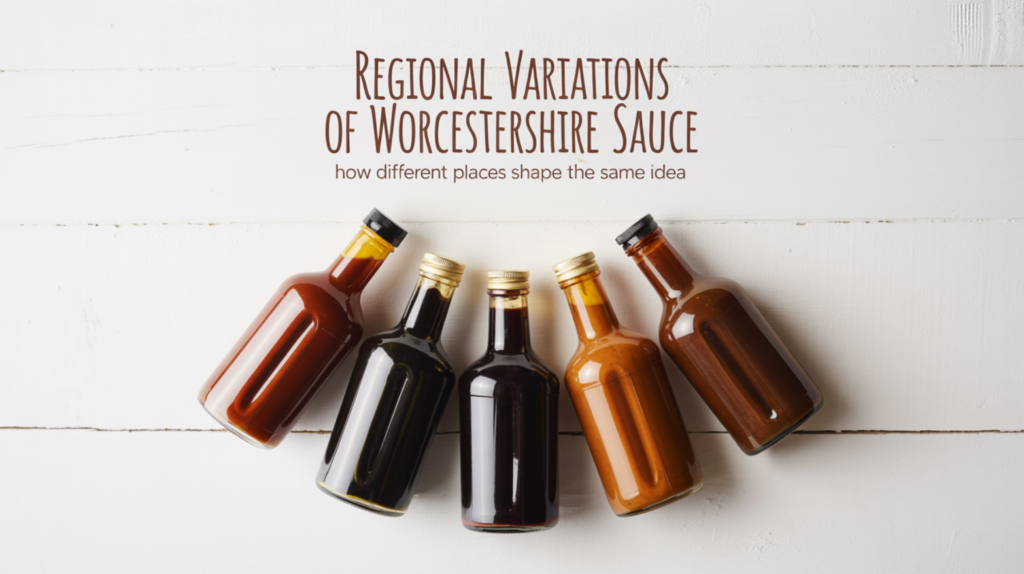
These shifts don’t remove the sauce’s identity; they simply create local “dial settings” of the same flavour concept, which is why Worcestershire sauce still feels like itself even when the bottle comes from a different market.
Think of it as one flavour language spoken with different accents.
Why Variations Happen in the First Place
Most regional differences come from three practical forces:
- Local taste preferences
Some markets prefer a sharper tang, others lean towards a rounder, sweeter profile, and some want a bolder savoury punch. - Ingredient availability and cost
Even small changes in vinegar type, sweeteners, or aromatic ingredients can shift the entire “feel” of the sauce. - Production choices
Time, fermentation intensity, and ageing practices affect integration. When a sauce is rushed, it can taste more direct and less layered; when it’s allowed to develop, it tends to taste calmer and more coherent.
These are not cosmetic differences, they change how the sauce behaves in food.
The “Tang-Forward” Style vs the “Depth-Forward” Style
Across regions, Worcestershire sauces often fall into two broad personalities:
Tang-forward versions
These are brighter and more assertive at the first sip. The acidity is more obvious, which can make the sauce feel lively and sharp. They work well when the dish needs a quick lift.
Depth-forward versions
These feel darker, more rounded, and more savoury. The tang is still present, but it doesn’t lead; it supports. These versions often shine in slow-cooked foods and sauces where you want richness rather than bite.
If you’ve ever wondered why two bottles can taste “right” yet feel quite different, this is often the reason.
How “Spice Character” Varies Between Markets
Spice in Worcestershire sauce is rarely about heat; it’s about aroma and warmth. Regional variations often change the spice impression in subtle ways:
- some versions smell more aromatic and clove-like
- others lean peppery and brisk
- some feel slightly darker and warmer, with a more pronounced savoury perfume
These differences are usually easier to notice through smell than through taste, because aroma sets expectations before the tongue confirms anything.
Ingredient Tweaks That Create Big Differences
Worcestershire sauce is sensitive to small recipe shifts. A few examples of changes that can create noticeable regional variation:
- vinegar choice influencing whether tang feels sharp or rounded
- sweetener type shifting the finish from warm to sticky
- savoury base intensity altering how “meaty” the sauce feels
- aromatic balance affecting whether the sauce smells bright or deep
This is part of why it helps to understand the different styles you’ll see under the same general Worcestershire label, even when the product category looks identical.
Why Some Variations Feel More “Authentic” Than Others
This is where people get confused: a sauce can be a legitimate regional variation and still feel less authentic to someone who expects the traditional profile. Authenticity, for most people, is about whether the flavour is integrated and recognisable, not whether it’s identical to one famous version.
When a bottle tastes scattered (sharp, sweet, and spiky in separate layers), it often feels less genuine because it doesn’t behave like a matured sauce. When it tastes unified (tang + savoury + aroma moving together), it tends to feel more credible, even if the balance is slightly different.
If you want a clearer way to judge that “real Worcestershire” feeling without relying on branding, the cues in how authenticity can be tested are surprisingly consistent across regions.
Conclusion – One Category, Many Local Expressions
Regional variations don’t weaken Worcestershire sauce as a category; they prove its flexibility. Different markets adjust tang, sweetness, aroma, and depth to fit local preferences, but the sauce remains recognisable because its job remains the same: making food taste fuller, brighter, and more finished.
Once you start noticing these variations, choosing a bottle becomes easier, not because one style is “correct”, but because you’ll know which regional expression fits the way you like your food to taste.